
Melasma can show up as dark and patchy discoloration on a person’s face. Our community in New Mexico is diverse, so we at SkinsationMD have taken the time to understand how melasma affects all Fitzpatrick skin types. This makes us an excellent source of information and guidance for addressing your hyperpigmentation.
A very common frustration with melasma treatments is that most approaches are only safe for specific skin types. They also tend to be intense with short-lived benefits. Patients notice rebound pigmentation, or a more intense recurrence of hyperpigmentation.
The providers at SkinsationMD approach melasma as a complex, individualized condition. We treat the patient as a whole, not just their concerns. Even though melasma is medically harmless, it often affects day-to-day comfort. SkinsationMD works to restore this confidence with the highly customizable laser Rohrer PicoLaZer for melasma treatment in Farmington, NM.
Our treatment plans are technologically advanced and are safe and effective for all Fitzpatrick skin types. We understand how to address your unique needs and cosmetic goals and can help you fall back in love with your reflection.
Why Melasma Varies Across Skin Tones
A patient’s skin tone plays a crucial role in how they respond to our Pico laser. Individuals with olive, medium, or darker skin tones (Fitzpatrick types IV-VI) often experience deeper pigmentation irregularities that can linger longer. Patients with lighter skin types may see their dark spots fade more quickly, but can still face recurrence.
The Rohrer PicoLaZer uses dual wavelengths (1064nm and 532nm) to treat a wide range of skin concerns with precision. This advanced technology helps refine pores, smooth the look of fine lines, and improve the appearance of acne scars while also targeting unwanted pigmentation.
Because of its versatility, SkinsationMD providers can safely use the Pico laser across all Fitzpatrick skin types, making it a reliable option for patients with different skin tones and treatment goals.
Sun exposure, hormonal changes, and genetics all interact differently across skin tones. Recognizing these variations helps us avoid a “one-size-fits-all” approach, ensuring each patient’s plan is personalized to address their unique needs.
The Role of Inflammation in Melasma
Our laser melasma treatment in Farmington, NM isn’t just about hyperpigmentation. It’s also about how your skin responds to stress. “Stress” in skin care isn’t always about a long day at the office. It can refer to several other external factors, like:
- Harsh retinoids or acidic cleansers
- Overuse of exfoliating products
- Extensive heat exposure (especially in hot or humid environments)
- Vigorous workouts that cause a buildup of sweat or oils
We also see hyperpigmentation in response to poorly scheduled cosmetic procedures. Patients sometimes seek our care to resolve hyperpigmentation concerns after receiving chemical peels or microneedling too frequently.
These treatments can, when improperly performed, damage the skin barrier and limit your skin’s ability to repair itself. In response to these powerful treatments, hyperpigmentation can sometimes form.
Patients with darker or olive skin tones may experience this more often than patients with fairer complexions. The inflammatory hyperpigmentation response can be more noticeable and longer-lasting for darker skin tones.
SkinsationMD uses the Pico laser for melasma treatment in Farmington, NM, to minimize unnecessary stress on the skin. We fine-tune the settings for each patient, space treatments with appropriate time to heal, and recommend supportive skincare. We also suggest products to help protect your skin’s barrier, not agitate it.

Common Challenges With Over-the-Counter Options
Many of our patients have tried at-home treatments, like brightening creams, serums, or exfoliating masks. While these products may provide minor improvements, they only act on the surface and don’t reach deeper pigment cells.
In some cases, overuse or incorrect use can even worsen hyperpigmentation, particularly in patients with darker complexions. To address these challenges, we focus on solutions that are grounded in medical understanding.
How Pico Laser Treatments Can Improve Melasma
SkinsationMD uses the Pico laser for melasma treatment in Farmington, NM, to offer safe, precise care. Ultra-short pulses target pigment directly, breaking it into smaller particles that your body can naturally eliminate. Compared to traditional lasers, the Pico laser generates less heat, reducing the risk of recurring pigmentation irregularities and minimizing downtime.
This makes them especially suitable for olive and darker skin types. The Pico laser can also be paired with other cosmetic treatments, like Intense Pulsed Light (IPL), for comprehensive rejuvenation and wrinkle reduction.
What Is Treatment Like With the Pico Laser?
Safe Care for Diverse Skin Types
At SkinsationMD, we personalize every melasma treatment in Farmington, NM. Our providers adjust the Pico laser’s settings based on your skin tone, sensitivity, and the depth and type of hyperpigmentation. This helps us minimize side effects, such as rebound pigmentation or excessive irritation.
Our community here in Farmington is diverse, and often underserved in the availability of treatments that are safe for their complexions. At SkinsationMD, we use the Pico laser because its short, controlled pulses offer a safer approach because they’re less disruptive to the surrounding tissue.
Additionally, the Pico laser stimulates collagen production beneath the skin. This encourages a healthier recovery process and continued improvement to your skin’s hydration and texture.
Our focus is on customizable care that works for a spectrum of skin tones and types. This measured process can be time-consuming, but it significantly reduces the risk of dark spots returning.

How to Prepare for Treatment
Patients preparing for a Pico laser melasma treatment in Farmington, NM, should avoid sun tanning, sun exposure, and self-tanners for 4 weeks before treatment. It’s also important to avoid chemical peels, laser resurfacing, and other skin-irritating treatments in the 2 weeks before your appointment.
Patients with Fitzpatrick skin types IV-VI should prepare for their appointment by using a pigment control cream for 4 to 6 weeks before their appointment. Our physicians are also able to prescribe this at your initial consultation, if necessary. Stop using this cream 48 hours before treatment to reduce the risk of rebound pigmentation.
All patients in the week leading up to their procedure should stop taking medications or supplements like aspirin, ibuprofen, ginkgo biloba, or ginseng. Patients should also avoid drinking caffeine and alcohol for 2 days before their appointment.
What to Expect During and After Treatment
Sessions are typically well-tolerated, often described as a light snapping sensation on the skin. We may recommend scheduling multiple sessions spaced several weeks apart to achieve the best results. You may notice mild redness or slight swelling immediately after a melasma treatment in Farmington, NM, but downtime is minimal.
Results are gradual. Dark spots soften and fade over several weeks. We set expectations clearly to maintain a realistic understanding of progress and outcomes.
Support Beyond the Procedure
Melasma treatment in Farmington, NM, doesn’t end when your procedure does. Our team provides ongoing monitoring, guidance, and education. We can make adjustments to your regimen, schedule check-ins, and perform additional treatments as needed.
This physician-guided support emphasizes partnership, ensuring that you feel informed, empowered, and supported every step of the way. Treatment is a journey, not a one-time fix.
Recovery After Pico Laser Treatment
The recovery from a Pico laser melasma treatment in Farmington, NM, is typically a very short process.
You may experience swelling in the treated areas. This is completely normal and should subside within 2 to 3 days. It can help to sleep with your head elevated for 2 days after your appointment to improve circulation.
You may also experience additional sensitivity and discomfort. The sensation is similar to a mild sunburn and lasts for 1 to 2 hours after treatment.
It’s important to note that dark spots fade in a unique way. The pigmented spots might darken further before flaking away from the skin. This process usually starts 4 to 7 days after treatment and can continue for several weeks.
We recommend using ice packs for roughly 5 minutes per hour to reduce swelling and the warm sensation on your skin. You should also follow proper sun protection: wear SPF 30+ to protect your skin, as it will be sensitive after the appointment.
Finally, avoid irritating or disturbing your skin throughout the healing process. Don’t pick at, scratch, or peel the dark spots. Avoid hot showers, saunas, or strenuous exercise that can dampen your skin with sweat, and stay hydrated.
Post Procedure Optimization: Where We Refine Results
This is where SkinsationMD sets a higher standard. Post-procedure optimization is not an afterthought. It’s a planned phase that supports healing and protects your results.
Many practices stop at the procedure. We plan for what comes next, because how your skin heals directly shapes your outcome. Better healing supports better results, less inflammation, and reduced pigmentation risk. Stronger skin holds results longer.
Your plan may include physician-directed options that support recovery and skin performance. These may be layered based on your treatment and your skin’s needs:
- PRP (platelet-rich plasma)
- BENEV ERC+ (exosomes)
- BENEV ERC mask
- Hydrinity HA mask
- Préime® Pure Bright for tone and brightness
- Préime® Glutathione + B3 for antioxidant support
- Préime® TXA Bright to support pigment regulation and reduce post-inflammatory hyperpigmentation risk
When appropriate, we may also include supportive therapies to guide recovery:
- Red light LED therapy to calm inflammation and support healing
- IV therapy (glutathione, vitamin C, alpha-lipoic acid) for internal support
- Medical-grade skincare protocols tailored to your skin
- Barrier repair strategies
- Pigment regulation when needed
Every step is intentional. The goal is not just recovery—it’s helping your skin heal in a way that preserves and elevates your results.
How to Manage Melasma Long Term
One of the most frustrating things about treating melasma is that it doesn’t always stay gone. Hyperpigmentation can occasionally return, interrupting the smooth complexion you’ve worked so hard to maintain. Patients may notice a recurrence of melasma after intense sun exposure or a shift in hormones, especially after pregnancy or menopause.
This isn’t a sign that your treatments aren’t working. It’s a reminder that melasma is a chronic condition. We work with each patient individually to build a long-term treatment plan for continued, sustainable improvements.
For patients with Fitzpatrick skin types IV-VI, treatment doesn’t always mean immediate erasure of melasma’s dark spots. Instead, patients can focus their efforts on discovering a consistently safe and effective approach that works sustainably. Dr. Sugar with SkinsationMD may recommend a follow-up appointment to address recurrences if they appear.
This schedule will probably fluctuate as you get closer to your goal, often shifting from monthly to seasonal treatments. We can help you see progress without unnecessary irritation or risk.
Maintaining results requires following a preventative daily routine. Sun protection is critical, as UV exposure can trigger recurrence. We also recommend using medical-grade topical therapies and gentle skincare practices.
The goal is to develop a routine that fits seamlessly into daily life, rather than being restrictive or cumbersome. This approach ensures long-term control, so you can manage melasma without unnecessary stress.
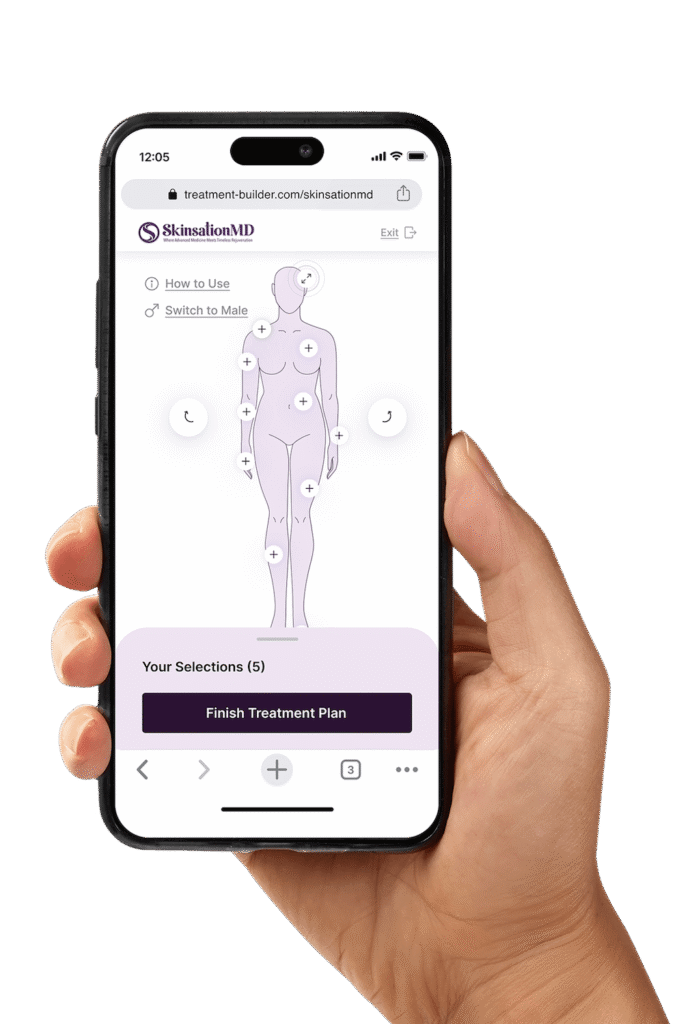
Take the first step toward clearer, more even-toned skin. Explore physician-guided melasma treatment in Farmington, NM, at SkinsationMD, tailored to your skin type and lifestyle. Use our treatment planner to discuss the Pico Laser and other options with your provider. Or request an appointment to develop a personalized plan that prioritizes safety, effectiveness, and long-term care.